
A flea exterminator treats the house and yard; your veterinarian treats the pet. Getting rid of fleas in Texas takes both at the same time, because most of the population is not on the animal. Texas A&M AgriLife Extension says most flea problems in Texas are caused by the cat flea, which feeds on cats, dogs and wildlife, and that eggs, larvae and cocoons build up in carpets, furniture and pet bedding. Treat only the dog or cat, and new fleas keep emerging from the floor.
Need a pest control company in Texas?
Call (888) 204-8144 and describe what you are seeing. A partner call service checks whether a participating local pest control company serves your ZIP code and connects you. No form, no account.
Call (888) 204-8144Texas Pest Control Pro does not perform pest control. We may be paid when you call.
This guide explains when it is worth calling a professional, what a flea treatment usually involves, how to prepare the house so it works, and how to reach a pest control company that serves your ZIP code.
Signs the problem is in the house, not just on the pet
- You see fleas jumping on carpet or furniture, or on your socks after walking across a room.
- People in the household get small, red, itchy bumps, usually on the ankles and lower legs, which AgriLife describes as typical flea bites.
- Your pet keeps scratching even after a flea product from the vet.
- You find fine reddish-black dust in pet fur or bedding. AgriLife explains this is flea feces, partially digested blood that flea larvae feed on.
- You moved into a home that had been empty. AgriLife notes that adult fleas can wait in their cocoon for up to 5 months and emerge within seconds when a host passes by, which is why long-vacant homes can “come alive” with fleas.
To check by phone whether a participating pest control company covers your ZIP code, call (888) 204-8144 and mention how many pets you have and which rooms are affected.
Why fleas keep coming back
The AgriLife guide to controlling fleas walks through the life cycle, and the numbers explain why a single spray rarely ends it:
| Stage | What AgriLife says | Where it is found |
|---|---|---|
| Egg | The female starts laying within 2 days of her first blood meal and, 4 to 9 days later, produces an average of 27 eggs per day | Falls off the pet into carpet and bedding |
| Larva | Develops in 5 to 11 days, feeding on adult flea feces | Under furniture, in pet bedding, moist shaded spots outdoors |
| Pupa (cocoon) | Becomes an adult after a week or two, but the adult may stay inside for up to 5 months | Carpet fibers, cracks, bedding |
| Adult | About 1/8 inch long; without a host, lives only a few days to 2 weeks | On the pet, jumping from floors and furniture |
The cocoon stage is the reason fleas seem to return a week or two after a treatment. Adults waiting inside cocoons can emerge after the first visit, so new fleas may appear even when the treatment is working. A good plan accounts for that with a follow-up and with steps that keep larvae from developing.
Where fleas live in a Texas house and yard
Indoors, AgriLife says flea larvae are usually found under furniture and in pet bedding. Outdoors, it notes that fleas do not survive well in hot, sunny lawns: relative humidity below 50 percent or soil temperatures above 95 degrees Fahrenheit kill flea larvae. The places to check are moist, shaded spots near where pets rest, such as under a deck, along a shaded fence line or in a crawl space a dog uses.
The National Pesticide Information Center (NPIC) recommends treating outside only if you have heavily infested areas, and checking shaded areas where pets lie outside.
What a professional flea treatment includes
AgriLife says a pest control company can treat both indoor and outdoor areas, and it describes an integrated program of sanitation plus treatment of the pet and the environment at the same time. In practice, a flea service usually covers:
- Inspection of pet resting areas, bedding, carpets, furniture and shaded outdoor spots.
- Indoor treatment of carpets, rugs and areas where pets sleep. AgriLife recommends asking the company to use the least toxic materials necessary and to include insect growth regulators (IGRs) for long-term control. IGRs disrupt the development of eggs and larvae.
- Outdoor treatment limited to the shaded areas where pets rest, if those areas are infested.
- A follow-up visit or check, to deal with adults that emerge from cocoons after the first treatment.
Treating the pet itself is a job for your veterinarian. NPIC points out that many dog products cannot be used on cats, and AgriLife warns that some cats are sensitive to botanical products, especially citrus oil products.
How to prepare the house before the exterminator arrives
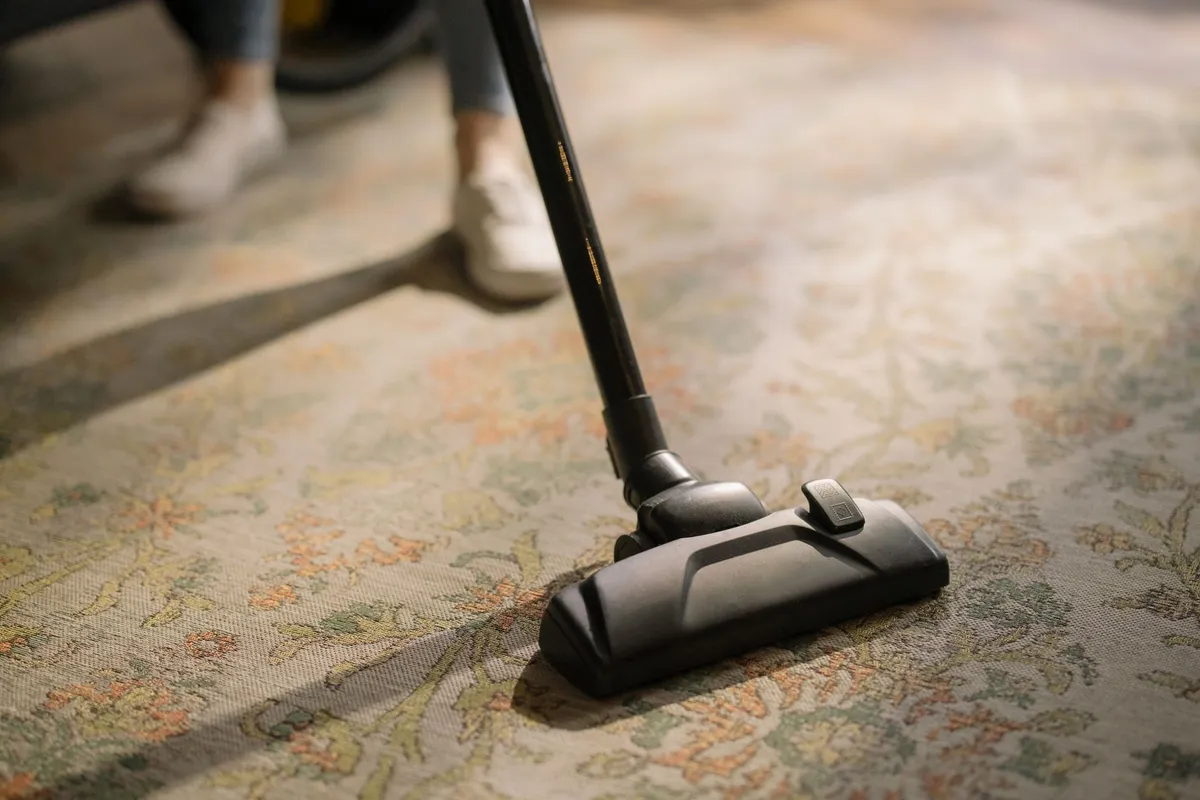
AgriLife’s advice for working with a pest control company is specific: vacuum carpets before the treatment, clear toys and clothing from the areas to be sprayed, and plan to stay off treated carpets until the spray has thoroughly dried, usually at least 2 hours. Vacuuming also helps straighten carpet fibers so the treatment reaches deeper.
Before and after the visit:
- Vacuum carpets, under furniture, cushions, along walls and baseboards. AgriLife says vacuuming removes up to 30 percent of larvae and up to 60 percent of flea eggs from a carpet. EPA recommends vacuuming every day during the initial control of an infestation.
- Throw out the vacuum bag, or empty the canister outside, at least once a week. Fleas can keep developing inside the bag.
- Wash pet bedding and any family bedding pets lie on in hot, soapy water. EPA suggests doing this every two to three weeks, and replacing old pet bedding if the infestation is severe.
- Consider steam cleaning carpets; EPA notes that hot steam and soap can kill fleas in all stages.
- Book the pet’s treatment with the vet for the same week as the house treatment.
Home remedies that do not hold up
AgriLife says there is little scientific evidence for garlic, brewer’s yeast, cedar bedding or herbal sachets, and that tests have shown brewer’s yeast does not protect pets from fleas. NPIC also advises avoiding home remedies, since most have not been found to be effective in homes. If you have tried them for weeks and the bites continue, that is a good point to call a professional.
Fleas, rodents and health
AgriLife notes that fleas that have fed on rodents may transmit diseases, including plague and murine typhus, and recommends avoiding close contact with wild rodents such as squirrels and rats. Cat fleas, it adds, do not carry plague. If you see signs of mice or rats along with fleas, deal with both; our page on rodent control in Texas explains what that involves.
Comparing flea exterminators
Every company sets its own prices, and the quote usually depends on the size of the home, how many rooms and outdoor areas need treatment and whether a follow-up visit is included. Our page on what affects pest control cost in Texas covers how to compare quotes. Ask each company:
- Will the treatment include an insect growth regulator?
- Which areas will you treat inside and outside, and how long should people and pets stay off them?
- Is a follow-up visit included, and when?
Pest control for hire in Texas is licensed by the Texas Department of Agriculture; our guide on checking a Texas pest control license shows how to look a company up. If the bites are only at night and only in bed, also read our page on bed bug treatment in Texas, since the two are sometimes confused.
Questions Texas homeowners ask
Is it worth getting an exterminator for fleas?
For a light problem, pet treatment from the vet plus vacuuming may be enough. When fleas are in several rooms, keep returning, or someone in the house is being bitten, a professional treatment of the home and yard, done at the same time as the pet’s, usually saves weeks of frustration.
Why do I see more fleas right after a treatment?
Adults can stay inside their cocoons for up to 5 months and emerge when stimulated, according to AgriLife. Vacuuming and walking through treated rooms brings them out, which is why a follow-up matters.
Do fleas live in Texas lawns?
Not in hot, sunny ones. AgriLife says low humidity and soil above 95°F kill flea larvae. Look in moist, shaded spots where pets rest.
Can I use my dog’s flea product on my cat?
No, not unless the label says so. NPIC warns that many dog products cannot be used on cats. Ask your veterinarian.
Sources read on November 13, 2026: Texas A&M AgriLife Extension, Controlling Fleas (Mike Merchant and James Robinson); U.S. EPA, Controlling Fleas and Ticks Around Your Home; National Pesticide Information Center, Fleas. General information; for your pet’s health, ask your veterinarian.
Checking what is available in your area
texaspestcontrolpro.com is a connection service. We do not perform pest control and we do not employ technicians. When you call, a partner call service checks whether a participating local pest control company serves your ZIP code and connects you; we may be paid when you call. Availability varies by area and by season, and you decide whether to move forward with anyone you speak to.
To check by phone, call (888) 204-8144 and describe where you are seeing fleas and whether your pets are already being treated.