Scorpion Control in Texas: Keeping Them Out and When to Call a Pro
Scorpions in the bathtub, on the wall or in the attic are a common Texas call. Texas A&M AgriLife’s advice is clear: spraying alone rarely works, so control starts with hiding places and entry points. Here is what helps and what a pest control company adds.
Scorpions in or around the house?
Call (888) 204-8144 and describe what you are seeing. A partner call service checks whether a participating local pest control company serves your ZIP code and connects you. No form, no account.
Call (888) 204-8144Texas Pest Control Pro does not perform pest control. We may be paid when you call.
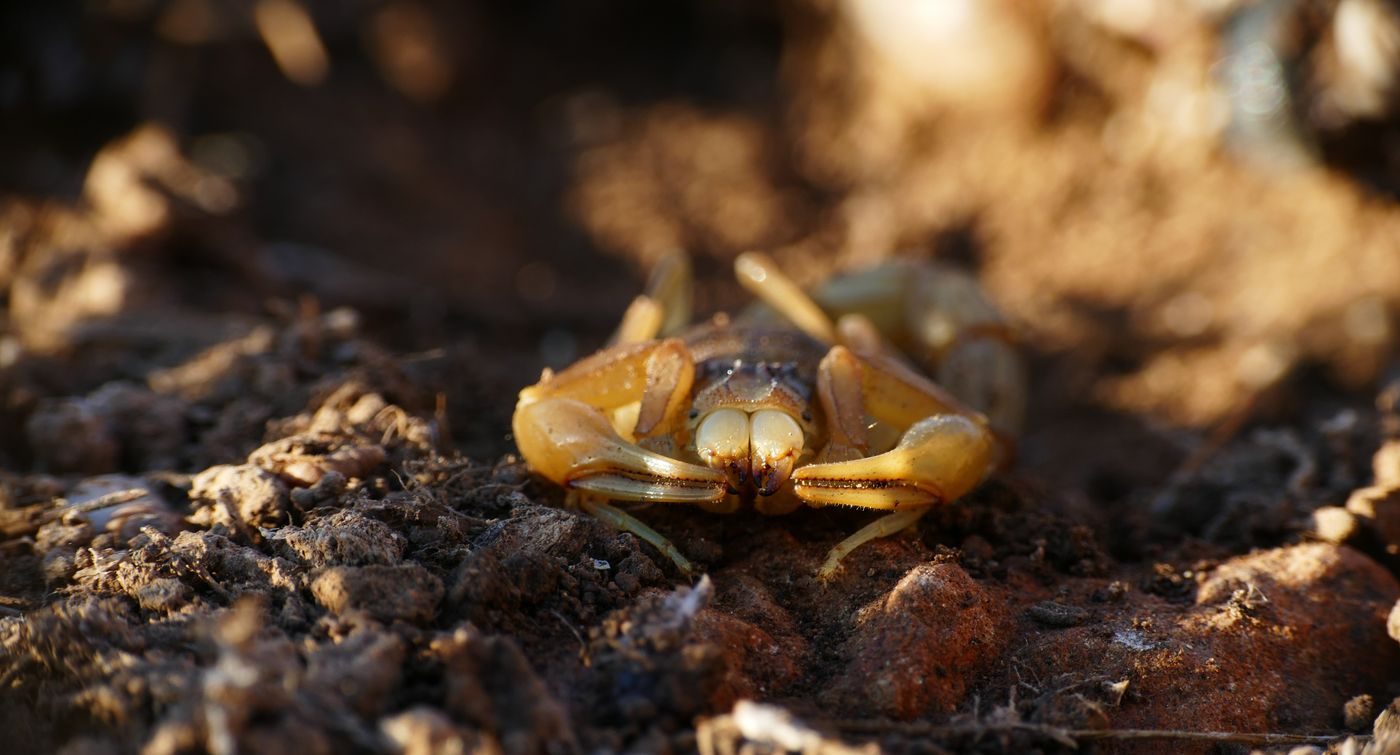
The scorpion you are most likely to find
According to Texas A&M AgriLife Extension, Texas has 18 scorpion species, but only one occurs throughout the state: the striped bark scorpion, the most common species in Texas. Adults are about 2½ inches long, yellowish tan with two broad dark stripes along the back. It is the only species found in the eastern part of the state; West Texas has more species (AgriLife records four near Amarillo and three near Abilene).
Why they get into houses
Scorpions hide during the day and come out at night. AgriLife notes that the striped bark scorpion climbs trees and walls, is often found in attics, and during hot weather may move from the attic into living areas. Their flat bodies let them shelter in small cracks and under stones, boards, bark and debris.
What actually reduces scorpions
AgriLife’s key point is that scorpions are difficult to control with insecticides alone, so the first step is changing the area around the house:
- remove trash, logs, boards, stones and bricks from around the structure;
- keep grass mowed near the house and prune bushes and branches away from it (branches give scorpions a path to the roof);
- bring firewood inside only to put it straight on the fire;
- weather-strip loose doors and windows and keep window screens in good repair;
- plug weep holes in brick or stone veneer with copper mesh, nylon scouring pad pieces or screen wire;
- seal around roof eaves, pipes and other cracks.

What a pest control company adds
A licensed provider combines that exclusion work with a treatment of the foundation perimeter and the entry points (doors, windows, eaves, cracks and crevices) using products labeled for scorpions — the approach AgriLife describes. If you treat yourself, follow the label for dosage and application. Ask the provider what is included: inspection of the attic, sealing of weep holes and gaps, number of visits.
Stings
AgriLife says stings from Texas scorpions produce only moderate reactions in most people, but allergic reactions are possible and a person who is stung should be watched closely. An ice pack relieves some pain; if swelling or pain persists, or if breathing difficulties occur, get immediate medical attention.
Questions homeowners ask
Why do scorpions keep coming back after spraying?
Because, as AgriLife puts it, scorpions are difficult to control with insecticides alone. Without removing hiding places and sealing entry points, new ones keep moving in.
Are scorpions in the attic normal?
For the striped bark scorpion, yes: AgriLife notes it is often found in attics and may move into living areas in hot weather.
Which cities see them?
The striped bark scorpion occurs statewide. See our pages for San Angelo, Lubbock, San Antonio and Abilene.
How do I find a scorpion exterminator near me?
Call (888) 204-8144. A partner call service checks whether a participating pest control company serves your ZIP code and connects you.
Related: sealing the gaps in a Texas home, fire ants in fall. Check any provider’s license first: how to check a Texas pest control license. Black widows and brown recluses favor the same clutter and gaps: see spider exterminator help in Texas.
Source, consulted November 8, 2026: Texas A&M AgriLife Extension — Scorpions (E-362).